
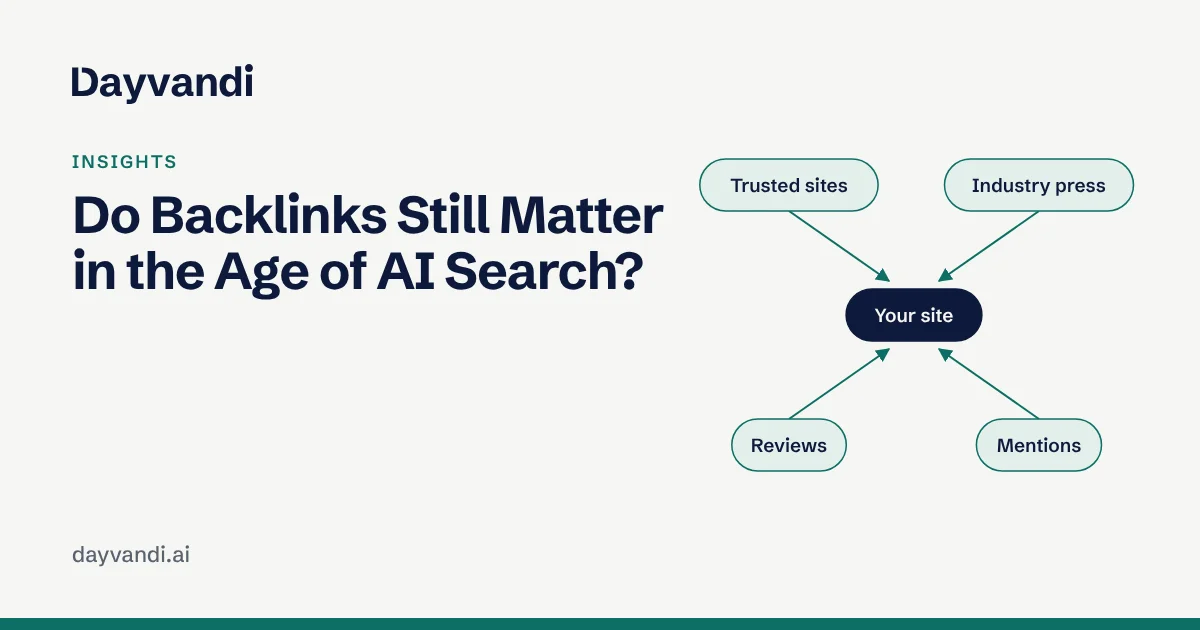
In short: yes. Links remain one of the signals search engines use to judge which sites to trust, and AI search makes the reputation behind those links even more important. What no longer works is building links for their own sake. The lasting approach is to give credible sources a real reason to reference you.
Key takeaways
- Links remain one of the signals search engines use to judge which sites to trust.
- AI tools build their picture of a brand from mentions on credible sources, with or without a link.
- Paid links, link networks, low-quality directories and keyword-anchor guest posts should be retired.
- Original data, genuine expertise, useful resources and partnerships earn links and mentions that last.
In 2014 I wrote that the future value of a link would depend on the marketing and the product behind it, and that every company should be able to answer one hard question: why does your company deserve to be linked to?
Twelve years later, that question matters more than it did then.
What do links do for search?
Search engines still use links to discover pages and to judge their importance and trustworthiness. A link from a respected industry publication tells a search engine something about you that your own pages cannot.
Google has said for years that links are one of many signals, and that their weight has changed over time. They are not the whole story. But a site with strong content and no credible references is still at a disadvantage in most competitive markets.
How has AI search changed the value of links?
AI tools form their picture of your brand from what they find across the web. When an AI platform recommends providers in your category, it tends to draw on the sources it treats as authoritative: industry publications, review platforms, comparison articles and community discussions.
That shifts the emphasis from links alone to mentions. A credible article that names your company as a leading option is valuable for AI visibility whether or not it links to you. The same work that earns good links tends to earn good mentions, so the strategy is largely the same. The measurement is broader.
Which link tactics no longer work?
Several tactics that were sold widely across the industry should be retired:
- Paid links and link networks. They violate Google’s spam policies and can trigger manual actions.
- Web 2.0 and low-quality directory links. Search engines largely ignore them, and they add nothing to your reputation.
- Mass guest posting with keyword anchors. It looks exactly like what it is.
- Buying links from “high DA” sites. Domain Authority is a third-party metric, not a Google signal.
How do you earn links and mentions that last?
Start with the question: why would someone credible reference you? Common answers include:
- Original data. Survey results, benchmarks or analysis that others in your industry want to cite.
- Genuine expertise. Commentary for journalists, podcasts and industry events.
- Useful tools and resources. Calculators, templates or guides people bookmark and share.
- Partnerships. Suppliers, clients, associations and community organizations you already work with.
- Presence in the places AI tools draw on. Accurate listings on the review sites, directories and comparison pages that rank in your category.
How do you measure links and mentions?
Track referring domains from relevant, reputable sites rather than total link counts. Watch branded search demand, which tends to rise as your reputation grows. For AI visibility, track how often your brand is mentioned and recommended for a fixed set of buyer questions across the major AI platforms.
The companies that earn the best links are rarely the ones chasing them hardest. They are the ones that make something worth referencing, and then make sure the right people know about it.